
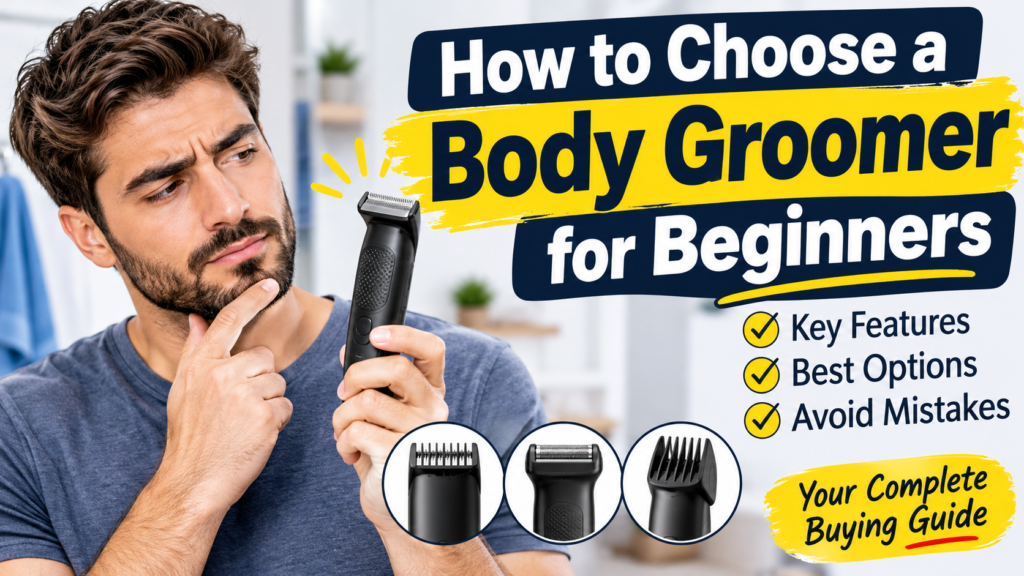
Walk into any store or scroll any shopping page and body groomers all start to look alike: a handle, a blade, a few plastic combs. Then come the unfamiliar terms (foil head, guard, showerproof, ergonomic) and a price range that runs from “impulse buy” to “serious investment.” If you want to know how to choose a body groomer for beginners without second-guessing every spec, this guide walks you through it in plain language.
You’ll learn how these devices work, which features matter most for a first purchase, how to match a device to the area you want to groom, how much to spend, and which mistakes to avoid. This is a buying guide, not a product roundup, so you’ll get criteria you can apply to any model.
Quick answer: A good first body groomer has rounded or skin-protective blade tips, adjustable guards with several length settings, a design you can hold comfortably, and a battery that lasts a full session. Check the manufacturer’s page for the exact model’s waterproofing and attachments, because both vary. Start with a longer guard, go slowly, and don’t expect any device to be completely free of nicks or irritation.
What Is a Body Groomer and How Does It Work?
A body groomer is an electric hair trimmer designed for areas below the neck: chest, stomach, back, arms, legs, underarms, and the groin area. Most use a small oscillating blade set behind a comb-style guard. The guard keeps the blade slightly off your skin, and the blade cuts hair to the length the guard allows.
That is the main difference from other tools you might own:
- Body groomer vs. beard trimmer: Beard trimmers are built for thicker, denser facial hair and often have a wider, stiffer blade. Body groomers usually emphasize skin protection and flexible handling on curved areas.
- Body groomer vs. electric shaver: A foil shaver cuts hair very close to the skin, while a trimmer leaves some length. Trimming and close shaving are different approaches, and they feel different on your skin.
If you’ve never groomed below the neck, a trimmer-style groomer with guards is generally the more forgiving place to start, because you control how much hair you remove. Good Housekeeping publishes a tested roundup of body groomers, which is a helpful independent reference once you’ve narrowed down what you want.
Quick Comparison: What Matters Most
| Feature | What Beginners Should Look For | Why It Matters |
|---|---|---|
| Blade design | Rounded tips or a skin-protecting blade guard | Reduces the chance of nicks on curved or bony areas |
| Guards | Several length settings, plus a no-guard option | Lets you start long and go shorter gradually |
| Trimmer vs. foil | Trimmer for body hair control; foil only if you want a close shave | Determines how short and how smooth the result is |
| Water resistance | Check exact model wording: washable, showerproof, or waterproof | Affects cleaning and where you can use it |
| Battery | Enough runtime for a full session, clear charging method | Prevents mid-session power loss |
| Attachments and grip | Comfortable handle; optional back-reach accessory only if needed | Better control means fewer mistakes |
| Maintenance | Easy-to-clean head, available replacement blades, clear warranty | Affects long-term cost and performance |
7 Things to Look for When Choosing a Body Groomer
Blade Design and Skin Protection
Blade design is the most important feature for a first-timer. Look for rounded blade tips, a protective comb, or a skin-guard system built into the head. These features create a buffer between the cutting edge and your skin.
Be realistic about what that means. Skin-protection features can help reduce the chance of cuts and pinching, but no design guarantees zero cuts or irritation. Technique, skin type, and how often you groom all play a part.
Adjustable Guards and Cutting Lengths
Guards control how much hair stays behind. Exact lengths vary by brand and model, but these ranges are a useful way to think about it:
- 1–3 mm (short): A neat, close-cropped look. Better after you’re comfortable with the tool.
- 3–6 mm (medium): A common starting range for chest and stomach, with a visibly tidier result and less skin exposure.
- 6–12 mm (longer): A forgiving first setting that thins out hair without getting close to the skin.
An adjustable body trimmer with a built-in length dial or several clip-on guards lets you step down gradually. Fixed single-length trimmers are fine if you already know the length you like, but they offer less room to experiment.
Trimmer vs. Foil Shaver
A trimmer uses a blade behind a guard and leaves hair at a set length. A foil shaver uses a thin metal screen with cutters underneath and cuts hair very close, similar to a face shaver.
For most beginners, a trimmer is the safer first choice because the guard sets a minimum length. A foil head suits you if you specifically want a smooth look, but close shaving can raise the risk of irritation and ingrown hairs for some people. Many models combine both, and some devices are really face shavers with body attachments, so read the specifications carefully.
Waterproofing and Wet/Dry Use
These terms are often used loosely, so read the exact model description:
- Washable: The head can be rinsed under the tap, but the device may not be meant for shower use.
- Showerproof or waterproof: Designed to be used in the shower or bath, subject to the manufacturer’s limits.
- Wet/dry: Can be used on dry skin or with water or shave gel.
For example, Philips describes its Bodygroom Series 3000 as a showerproof groin and body trimmer. That is a manufacturer claim, and it applies to that specific model. Waterproofing varies by exact model, so confirm the details before you assume any device can go in the shower.
A waterproof body groomer is worth it if you like to groom in the shower or want simple rinse-clean maintenance. It’s a convenience, not a requirement.
Battery Life and Charging
Check three things: how long one charge lasts, how long charging takes, and whether the device is cordless or corded. For beginners, a cordless model is easier to maneuver around your back and legs. Battery runtime figures come from manufacturers and depend on use, so treat them as estimates. A body session is usually short, so extreme runtime matters less than reliable charging and a battery indicator.
Attachments and Ergonomic Design
A comfortable grip matters more than a long list of attachments. Look for a handle that feels secure when wet and a head that pivots or sits at a useful angle on curved areas.
Extras can help, but only if you’ll use them:
- Back-reach accessories: Useful if you struggle to reach your upper back. Skip them if you’d rather ask for help or use a mirror.
- Detail or precision attachments: Helpful for tidying edges and smaller areas.
- Comb sets: Make sure replacements are easy to find.
The Philips Bodygroom Series 5000 page shows how a manufacturer lists its attachments and features. Use pages like this to compare what’s actually included, since contents differ between models and regions.
Cleaning, Maintenance and Replacement Blades
Hair and skin debris slow down any blade, so choose a device that’s easy to clean: a removable head, a rinse-friendly design, or a cleaning brush in the box. Before buying, find out:
- Whether replacement blades or heads are sold, and roughly what they cost
- How the manufacturer recommends cleaning and oiling the blades
- The warranty length and what it covers
A cheap device with no replacement parts can cost more in the long run than a slightly pricier one you can maintain.
How to Choose a Body Groomer for Beginners Based on Body Area
Different areas have different needs. You don’t have to buy a specialist tool for each one, but it helps to know where a general-purpose groomer is enough.
For Chest and Stomach
These are flat, easier-to-see areas, and they’re the best place for a beginner to start. An adjustable body trimmer with a medium guard setting usually handles chest and stomach hair well. If you want a broader overview of well-reviewed options, see our guide to the best body groomers for men in 2026.
For Sensitive Skin
If your skin reacts easily, prioritize skin-protecting blade designs, a gentle trimming approach, and a longer starting guard. Avoid close shaving at first. The American Academy of Dermatology’s advice on preventing razor bumps is a good reference for habits that help. For model ideas, our list of the best body groomers for sensitive skin is a useful next step. A body groomer for sensitive skin can reduce risk, but it can’t remove it.
For Intimate Areas
The skin here is thin and curved, so slow, careful trimming with a guard matters most. Some devices are designed with this area in mind, while others are not recommended for it, so check the manufacturer’s instructions before using any device on sensitive areas. If you want something focused on this use, browse our picks for the best intimate trimmers for men.
For Back and Legs
Large, hard-to-see areas are where ergonomics and reach matter. Consider a longer handle or back-reach accessory for your back, and a wider head for legs. If you’re deciding between brands, our comparison of MANSCAPED vs. Meridian shows how two popular body trimmers approach design and features.
How Much Should a Beginner Spend on a Body Groomer?
You don’t need the most expensive device to get a good first experience. As a rough framework, not a price list:
- Budget tier: Good enough for casual trimming, but check build quality, guard options, and whether replacement parts are available. Our guide to the best body groomers under $50 covers this range.
- Mid-range tier: Often adds better ergonomics, more guard settings, longer battery life, and wet/dry design. See our best body groomers under $100.
- Premium tier: Worth considering only if you’ll groom often and value extra attachments or build quality.
Prices change frequently and differ by retailer, so confirm the current price before you buy.
Common Body Groomer Buying Mistakes
- Buying a shaver when you want a trimmer. Foil heads cut very close, which isn’t what most beginners want at first.
- Ignoring guard options. A device with only one length leaves no room to experiment.
- Assuming “waterproof” means the same everywhere. Read the model-specific description.
- Paying for attachments you won’t use. A comfortable, reliable core tool beats a crowded accessory box.
- Skipping the maintenance details. Without replaceable blades and a clear cleaning routine, performance drops.
- Using the shortest setting first. Start longer and work down.
- Expecting a perfect, irritation-free result. Even careful grooming can cause redness or bumps for some people.
How to Use Your First Body Groomer Safely
- Read the manual, especially the sections about sensitive areas and water use.
- Start with a longer guard and a small test patch.
- Work with clean, dry or properly prepared skin. The American Academy of Dermatology offers general guidance on how to shave that applies to preparing your skin.
- Use light pressure and let the blade do the work.
- Pull skin taut gently on curved areas so the head glides evenly.
- Move slowly, and stop if you feel pulling or burning.
- Clean the device after each use and store it dry.
Final Buying Checklist
Before you check out, make sure your pick ticks these boxes:
- Rounded blade tips or skin-protection features
- Several guard lengths (including a longer starter option)
- Trimmer-style cutting, unless you specifically want a close shave
- Clear model-specific water-resistance wording
- Battery life and charging method that fit your routine
- A comfortable grip and attachments you’ll actually use
- Easy cleaning, available replacement blades, and a stated warranty
- A price you’ve confirmed with the current retailer
- Manufacturer instructions for any sensitive areas you plan to groom
That’s really the whole process for how to choose a body groomer for beginners: pick the features that protect your skin, start with longer lengths, and look for a tool that’s easy to hold and maintain. Your first device doesn’t have to be your last, and the right choice is the one you’ll use comfortably and consistently.
Frequently Asked Questions
What is the best body groomer for beginners?
There’s no single best model for everyone. The best body groomer for beginners has skin-protecting blade design, adjustable guards, a comfortable grip, and clear instructions for the areas you plan to groom. Compare current options in our best body groomers for men in 2026 guide.
How much should a beginner spend on a body groomer?
Many beginners do well with a budget or mid-range device that has adjustable guards and replaceable parts. Spend more only if you want extra comfort, battery life, or attachments. Check current prices before buying.
Is a body groomer better than a regular trimmer?
Usually, for body hair, yes. Body groomers are designed for curved skin and often include skin-protection features and body-appropriate guards. A regular beard trimmer can work but may be less comfortable or forgiving.
Should beginners choose a foil shaver or a trimmer?
Most beginners should start with a trimmer, since guards limit how close the cut is. Choose a foil shaver only if you specifically want a smoother, closer result and understand it may increase irritation risk for some skin.
What guard length should beginners start with?
Start with a longer setting, in the 6–12 mm range, then step down to 3–6 mm once you’re comfortable. Exact lengths vary by model.
Can beginners use a body groomer on sensitive areas?
Some can, but not every device is designed for it. Check the manufacturer’s instructions, use a longer guard, go slowly, and stop if you feel discomfort.
Are waterproof body groomers worth buying?
They’re worth it if you groom in the shower or want easy rinse cleaning. Waterproofing varies by exact model, so check the manufacturer’s wording.
How often should you clean a body groomer?
Clean it after each use by brushing or rinsing off hair (if the model allows water), then dry it. Follow the manufacturer’s guidance on oiling blades.