
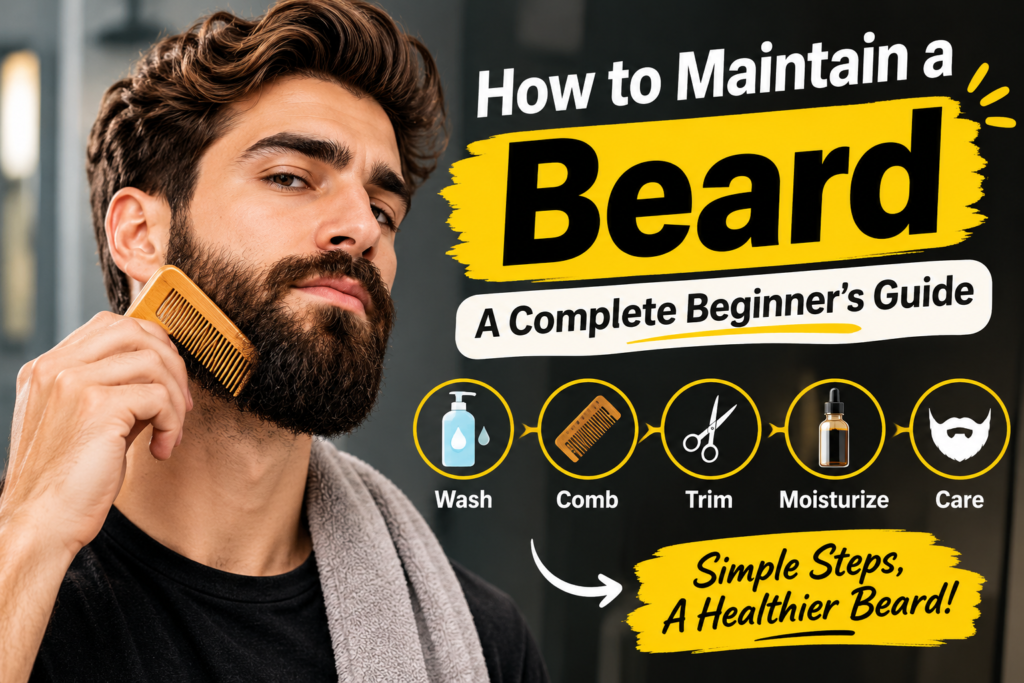
Most guys get a few weeks into a beard and hit the same wall: it itches, it looks messy, and nobody explained what to do about it. The good news is that beard maintenance is simpler than the product aisle makes it look.
You need to wash it gently, keep it moisturized, comb or brush it, and trim it on a schedule that suits your growth. This guide shows you how, with the reasoning behind each step.
The Short Answer: How to Maintain a Beard
To maintain a beard, wash it a few times a week with a gentle beard wash, moisturize the beard and the skin underneath, comb or brush it daily, and trim it regularly to hold its shape. Clean up the neckline every few days. Keep products minimal, because consistency matters more than a crowded bathroom shelf.
Philips boils beard care down to four basics: cleanse, shape, trim, and moisturize. That framework runs through this whole guide.
What You Need to Maintain a Beard
You don’t need a bathroom cabinet full of products. A practical beginner kit looks like this:
- A gentle beard wash or cleanser: gentler than body soap or most regular shampoos, and made with facial skin in mind.
- A moisturizing product: beard oil, beard conditioner, or a fragrance-free facial moisturizer, depending on your skin.
- A beard comb or brush: for detangling and spreading product evenly.
- A trimmer with adjustable guards: for length control and tidy edges.
- Small scissors: for flyaways and stray hairs.
A beard trimmer shapes and shortens. A comb detangles and spreads product. A brush smooths and styles. Wash, conditioner, oil, balm, and butter are covered in the sections below.
A small set of tools you use every week beats a shelf of products you don’t touch. Add extras only when you have a specific problem to solve.
How to Maintain a Beard Step by Step
Here is the full routine at a glance:
- Wash: a few times a week, with warm water and a gentle cleanser.
- Dry: pat it dry, don’t rub.
- Moisturize: beard oil, conditioner, or balm, plus care for the skin underneath.
- Comb or brush: to detangle and distribute product.
- Trim and shape: on a schedule that fits your beard length.
- Check the skin: look for dryness, flakes, or irritation and adjust.
Each step has its own section below.
How to Wash and Dry Your Beard
Your beard collects dust, sweat, oil, and food, and the skin underneath needs cleaning too. But washing too often or too roughly dries everything out.
How often should you wash your beard? There’s no single rule. Healthline suggests that two or three times a week is enough for many people, unless your beard gets especially dirty or sticky. Some grooming experts recommend daily cleansing instead, so it depends on your skin and lifestyle. Oily skin may tolerate or need more frequent washing, while dry skin usually does better with less.
How to wash your beard:
- Wet your beard thoroughly with warm water.
- Apply a small amount of beard wash and lather gently.
- Massage it into both the hair and the skin beneath.
- Rinse until no product remains.
Why it matters: massaging the skin loosens dead skin cells and oil. Leftover soap can leave residue that irritates the skin.
How to dry your beard: pat it with a clean towel instead of rubbing hard, since rough rubbing can cause breakage, as Braun points out. If you have a longer beard, a hair dryer on a low-heat setting can help.
How to Moisturize Your Beard
Dry skin under a beard is a common cause of itch and flakes. Moisturizing helps both the hair and the skin. How to moisturize your beard depends on your skin type:
- Normal to dry skin: beard oil usually works well.
- Oily or acne-prone skin: a lightweight beard conditioner or a non-comedogenic moisturizer may be a better fit, since heavy oils can feel greasy.
- Sensitive skin: choose fragrance-free products.
These skin-type pairings follow the guidance Healthline summarizes from the American Academy of Dermatology.
How to Apply Beard Oil
Beard oil conditions the hair and moisturizes the skin underneath. It does not make your beard grow faster, and it can’t fill in patchy areas. It improves softness and appearance, which can make a beard look healthier.
- Start with the beard clean and slightly damp, such as right after a shower.
- Put a few drops in your palm and rub your hands together.
- Work it into the skin first, then through the hair from root to tip.
- Comb it through to spread it evenly.
Why it matters: the oil should reach the skin, not just coat the surface of the hair. Less is more. Too much product can leave a beard greasy and can contribute to clogged pores and breakouts.
If dryness is your main struggle, our guide to the best beard oils for dry skin covers options worth comparing.
How to Use Beard Balm
Beard balm is thicker and waxier than oil. It conditions, adds light hold, and helps tame longer or curlier beards.
- Scoop out a small amount, about the size of a pea for a short beard.
- Warm it between your palms until it softens.
- Work it through the beard and shape the hair with your hands or a comb.
Why it matters: warming the balm spreads it evenly. Too much will make your beard look heavy and sticky.
Beard Oil vs. Beard Balm
| Beard Oil | Beard Balm | |
|---|---|---|
| Texture | Lightweight liquid | Thick, waxy |
| Main job | Moisturizing and softening | Conditioning and light styling |
| Best for | Short to medium beards, stubble | Longer, coarser, or unruly beards |
| Skin feel | Light | Richer |
Many guys use oil during the day and balm when they want control. You don’t have to use both. If you’re comparing specific oils, we put two popular options head to head in our Honest Amish vs. Viking Revolution beard oil comparison.
Beard butter is a richer conditioning product that tends to suit coarse beards. Beard conditioner is a wash-in or leave-in product that softens hair and works well if oils feel too heavy.
How to Brush and Comb a Beard
Comb or brush: which one do you need?
- A beard comb detangles, spreads product, and works well for any length. Pick a tooth spacing that suits your beard’s length and thickness.
- A beard brush (often boar bristle) helps spread natural oils and smooth longer, fuller beards.
Braun suggests combing daily to prevent tangles, and brushing after applying oils or products to distribute them evenly.
Why it matters: combing lines the hairs up so your beard looks neat and your trim comes out even. But aggressive brushing can irritate skin and pull hair, so work gently, especially on short beards, where the skin is easily irritated. Rinse combs and brushes regularly and let them dry fully.
How to Trim and Shape Your Beard
Trimming keeps your beard’s shape tidy. It does not make hair grow faster or thicker. It does help control stray hairs and split ends.
How to trim a beard:
- Trim when the beard is clean and fully dry. Wet hair stretches, so you can end up cutting more than you meant to, as Gillette explains.
- Comb first to lift and align the hairs.
- Start with a longer guard and work down gradually. You can always cut more, but you can’t undo a cut.
- Keep the sides slightly shorter than the chin for a natural taper.
- Tidy the mustache by brushing it down and trimming over the lip.
- Moisturize afterward, since trimming can leave skin a bit dry.
How often to trim: if you’re growing your beard out, Healthline’s rough guide is about every four weeks. If you’re maintaining a length, every 7 to 10 days is typical. Gillette suggests every 5 to 7 days for short and medium beards. These are starting points, not rules.
If shaving or trimming tends to irritate your skin, check out our picks for beard trimmers for sensitive skin.
How to Define Your Neckline and Cheek Line
A clean neckline is often what separates a tidy beard from a scruffy one.
- Neckline: a common rule is to place two fingers above your Adam’s apple and trim everything below that line, curving in a gentle “U” toward the back of each ear.
- Cheek line: keep it natural or lightly defined. Avoid taking it too low, which can distort your face shape.
- Symmetry: check both sides in the mirror and use a comb as a guide.
Why it matters: without a defined neckline, hair creeping down the neck can look unkempt even when the rest of the beard is tidy. Go slowly, because a neckline set too high is hard to fix.
Daily Beard-Care Routine
A daily beard maintenance routine takes about five minutes.
Morning:
- Rinse with warm water (washing with product isn’t needed daily).
- Pat dry.
- Apply a few drops of oil or a pea-sized amount of balm.
- Comb or brush into shape.
Evening:
- Rinse off the day’s dirt if needed.
- Check for itchiness, flaking, or redness.
- Reapply moisturizer if your skin feels tight.
Why it matters: short daily habits keep a beard manageable and make a big difference in how it feels.
Weekly Beard Maintenance Schedule
Use this as a starting point and adjust. How often you need to do each task depends on beard length, skin type, growth rate, and personal preference. No schedule fits everyone.
| Frequency | Tasks |
|---|---|
| Daily | Comb or brush; moisturize with oil or balm; quick check for dryness or irritation |
| Every 2–3 days | Wash with beard wash (more or less often depending on skin); tidy neckline and stray hairs |
| Weekly | Full trim touch-up for short beards; deeper conditioning; clean combs and brushes |
| Every 2–4 weeks | Larger shape-up or length trim; gentle exfoliation if your skin tolerates it; replace worn blades or heads as the manufacturer recommends |
Beard Maintenance by Length
Short Beards and Stubble
- Trim more often, since short beards lose their shape quickly.
- Lightweight oil or moisturizer helps most, since the skin is very exposed.
- Be gentle, because irritation shows more on short growth.
Medium Beards
- Combing and conditioning matter more as hair gets longer.
- Keep the neckline defined and watch for the cheek line drifting upward or downward.
- Trim the sides lightly to keep a clean taper.
Long Beards
- Brushing and conditioning become the priorities. Longer hair tangles more and dries out more.
- Trim ends periodically to stay on top of split ends and keep the shape.
- Balm or butter can help control volume. If your beard is thick and wiry, you may also want to look at the best beard straighteners for thick beards.
How to Prevent Beard Itch and Dandruff
Beard itch is often linked to dry skin underneath. In the early weeks of growth, the stiff new hairs can also irritate skin. To manage it:
- Wash gently, without scrubbing or overwashing.
- Moisturize the skin as well as the hair.
- Avoid scratching, which can worsen irritation.
- Keep your hands and tools clean.
How to soften a dry beard: use a conditioner after washing, apply oil or balm daily, towel dry gently, and limit very hot water.
How to prevent beard dandruff: flaking can come from dry skin, washing too harshly or too rarely, or a skin condition. CVS notes that beard dandruff is a mild form of seborrheic dermatitis, and that persistent or worsening symptoms are worth taking to a dermatologist. Moisturizing and gentle, regular cleansing can help manage mild flaking, but no grooming product is guaranteed to cure it. If you see redness, a rash, or flaking that doesn’t improve, ask a pharmacist or doctor instead of piling on more products.
Common Beard Maintenance Mistakes
- Washing too much. Overwashing and rough scrubbing can dry out hair and skin.
- Ignoring the skin under the beard. Healthy skin is the foundation of a healthy-looking beard.
- Using too much product. It weighs hair down and can clog pores.
- Trimming wet or rushing it. Wet hair stretches, and quick cuts cause uneven lines.
- Skipping the neckline. It’s the fastest way to look unkempt.
- Over-brushing. Aggressive brushing irritates skin and pulls hair.
- Expecting oil to grow a beard. It conditions; it doesn’t boost growth.
- Constantly switching products. Give a routine a few weeks before judging it.
- Neglecting tools. Dirty combs and dull blades cause irritation.
Beginner Beard-Care Tips
- Start simple. Wash, moisturize, comb, trim. Add products only when you need them.
- Let it grow before you judge it. The first few weeks are the awkward phase.
- Match products to your skin. Oily, dry, sensitive, and acne-prone skin all need different choices.
- Get a professional shape once. Follow the lines your barber sets at home.
- Be consistent. Five minutes every few days beats a long session once in a while.
- Protect your skin in sun and cold. Wear sunscreen on exposed skin under a short beard in summer, and moisturize more when winter air is dry.
- Don’t expect miracles from any product. Grooming improves how a beard looks and feels. It doesn’t change genetics.
Frequently Asked Questions
1. How often should you wash your beard?
For many people, two to three times a week is enough, with a rinse on other days. Oily skin or a dirty job may call for more, and dry skin for less. Avoid overwashing.
2. How do you take care of a beard as a beginner?
Wash gently, moisturize the hair and skin, comb daily, and trim on a regular schedule. Keep your kit simple at first.
3. Does beard oil make a beard grow faster?
No. Beard oil conditions the hair and moisturizes the skin underneath. It doesn’t speed up growth or fill in patches.
4. How often should you trim a beard?
It varies. Common guidance is every 7 to 10 days to maintain length, and about every 4 weeks while growing out. Short beards often need touch-ups more often.
5. What’s the difference between a beard comb and a brush?
A comb detangles and spreads product. A brush smooths and styles, and is especially useful for longer, fuller beards.
6. Do I need beard wash, or can I use regular shampoo?
Beard washes are made to be gentler on facial skin. If you’re using shampoo, choose a mild one and don’t overdo it.
7. Can grooming products cure beard dandruff?
No product can promise that. Gentle washing and moisturizing can help mild flaking, but persistent or severe symptoms should be checked by a dermatologist.
8. Is beard oil or balm better for beginners?
Oil is usually the easier starting point, especially for short beards. Balm becomes more useful as your beard gets longer or harder to control.
Conclusion
Maintaining a beard comes down to a few repeatable habits: gentle washing, regular moisturizing, daily combing, and trimming that keeps the shape tidy. You don’t need expensive products or a complicated routine.
Start with the basic kit, build the routine around your beard length and skin type, and adjust as you learn what your beard needs. Give it a few weeks, stay consistent, and it will look noticeably better.